
Common Spiders in North Texas: A Mom’s Guide to What’s Helpful, Harmless and Worth a Closer Look
Nothing turns an ordinary Tuesday into a full family investigation quite like a large spider sprinting across the living room.
Someone screams. Someone climbs onto the furniture. One child wants to keep it as a pet. Another child announces that there are probably “a million more” hiding in the walls.
And Mom? Mom is left holding a shoe, a mixing bowl or whatever spider containment equipment was within reach.
Before you put the house on the market, take a breath. Most spiders found in and around North Texas homes are harmless. They are predators that help control flies, mosquitoes, moths, roaches and other pests and spider bites are much less common than most people assume. In Texas, widow spiders and recluse spiders are the two groups considered medically significant.
That does not mean you need to welcome every spider into the guest room. It simply means that learning what you are looking at can help you respond appropriately instead of assuming every brown spider is a brown recluse.
Let’s meet some of the most common eight-legged neighbors in North Texas.
Common North Texas Spiders at a Glance
| SPIDER | WHERE YOU MAY FIND IT | CONCERN LEVEL | HELPFUL OR HARMFUL? |
|---|---|---|---|
| Wolf Spiders | Lawns, Garages, Entryways and Floors | Low | Helpful Predator |
| Jumping Spider | Windows, Sunny Walls, Patios and Fences | Low | Helpful Predator |
| Orb Weaver | Gardens, Shrubs, Fences and Eaves | Low | Excellent Outdoor Pest Control |
| Cellar Spider | Garages, Crawl Spaces and Quiet Corners | Low | Eats Insects and Other Spiders |
| Grass Spider | Lawns, Shrubs, Foundations and Steps | Low | Helpful Outdoor Predator |
| Southern House Spider | Window Frames, Cracks, Barns and Outer Buildings | Low | Often Mistaken for a Recluse |
| Black Widow | Wood Piles, Meter Boxes, Garages, and Sheltered Outdorr Areas | Use Caution | Medically Significant |
| Brown Recluse | Boxes, Closets, Attics, Garages, and Undisturbed Storage | Use Caution | Medically Significant |
<- Scroll ->
A “low” concern level does not mean children should handle the spider. It means the spider is not considered medically dangerous and would generally rather escape than bite.
Why Are There Spiders Around My Home?
Spiders go where the food is.
Exterior lights attract moths, flies and other insects. Moist areas may support mosquitoes and small pests. Cracks around doors provide easy entry. Cluttered garages, attics and closets offer quiet hiding places.
When a home has plenty of insects, spiders see an all you can eat buffet with excellent shelter and no rent.
That is why successful spider management involves more than knocking down webs. Reducing the insects spiders eat, sealing entry points and removing hiding places usually provides better long-term results than chasing individual spiders with a vacuum attachment. (Insects in the City)
Wolf Spiders: Big, Fast and Much Less Dangerous Than They Look
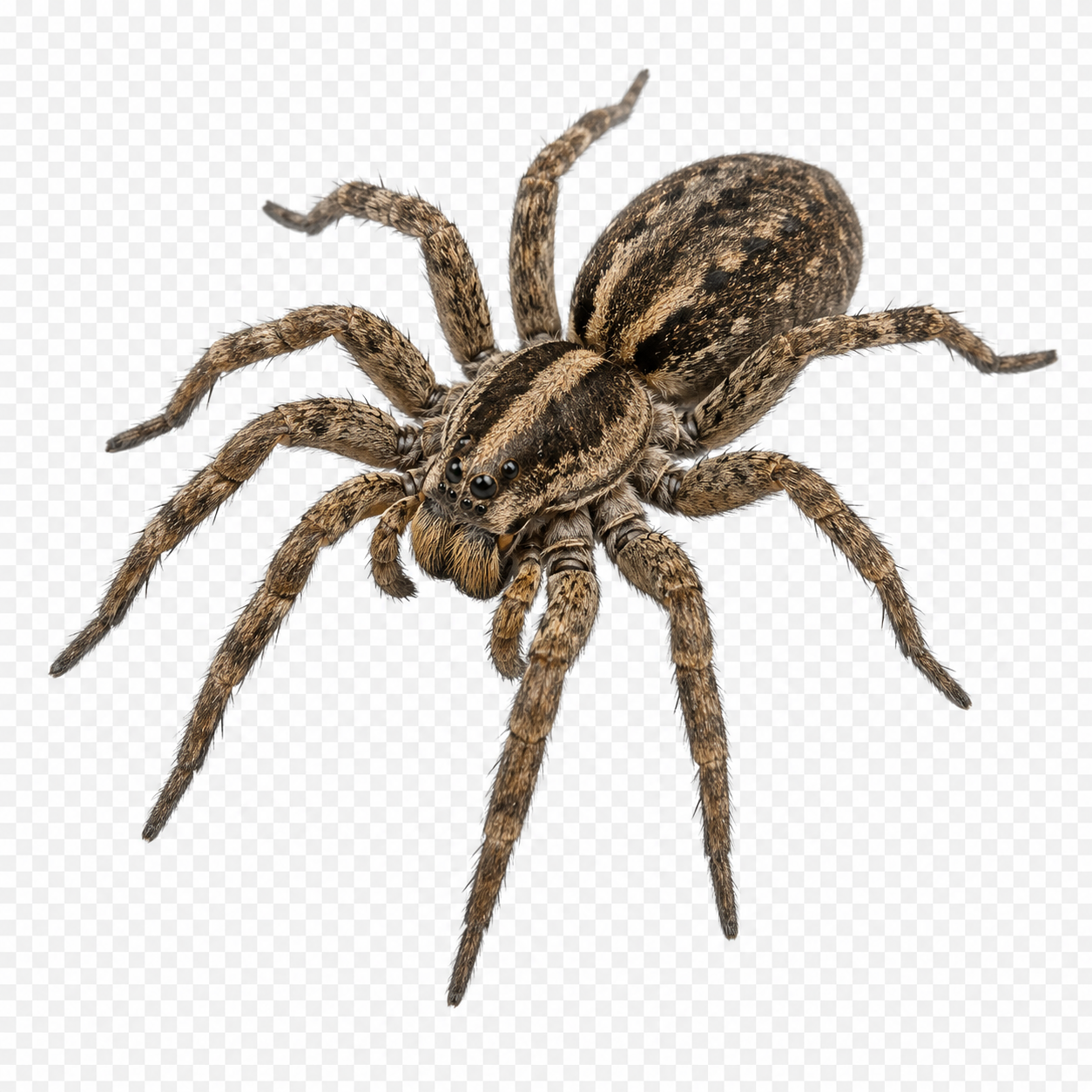
Wolf spiders are among the most common spiders in Texas lawns and backyards. They are usually brown, gray or black with stripes or mottled markings. Some are relatively small, while others appear impressively large when their legs are fully extended.
Unlike spiders that wait in webs, wolf spiders actively hunt their prey. They are especially active after dark and have excellent night vision. Their speed is useful for catching insects, although it is not especially comforting when one races across the garage floor at approximately the speed of a small sports car.
Wolf spiders commonly enter homes through gaps under doors. Their large size and quick movements can be alarming, but they are not aggressive and are generally not dangerous to people or pets. One wolf spider indoors usually means a wandering outdoor hunter took a wrong turn, not that it has moved the entire extended family into the pantry.
Female wolf spiders are also unusually attentive mothers. They carry their egg sacs with them, and after the spiderlings hatch, the babies climb onto their mother’s back until they are ready to hunt independently.
Yes, the moving brown spider covered in dozens of tiny dots is probably carrying babies.
No, discovering this fact after trying to sweep it is not anyone’s favorite surprise.
Mom’s takeaway: Wolf spiders look intimidating, but they are beneficial outdoor predators. A cup and stiff piece of paper can be used to move one outside when you are confident of the identification.
Jumping Spiders: The Curious Little Window Watchers
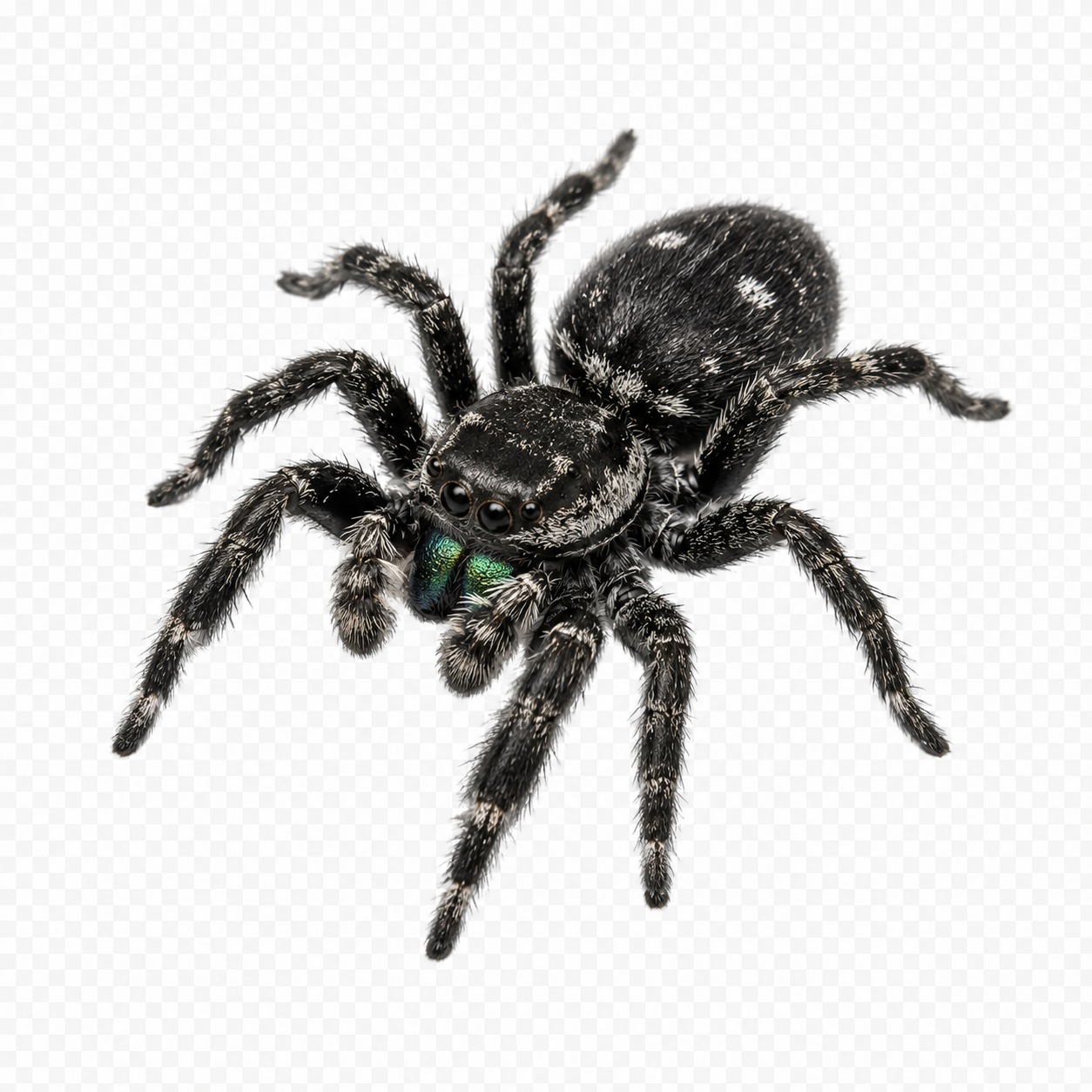
Jumping spiders are compact, alert-looking spiders with prominent forward facing eyes. Many are black or brown with white markings, although some have bright red, yellow, blue or metallic coloring.
These spiders do not build webs to catch prey. They use excellent eyesight to locate insects and then pounce. They are active during the day and are often found near windows, sunny walls, fences and patio areas. When they jump, they attach a silk safety line so they can dangle or climb back if the landing does not go according to plan.
Jumping spiders can seem surprisingly curious. One may turn and appear to watch you as you move. It is not plotting anything. It is simply a visually oriented hunter trying to decide whether you are relevant to its afternoon.
Jumping spiders are unlikely to bite unless they are trapped or handled. Their small size and daytime behavior can also make them an interesting spider for children to observe from a respectful distance.
Mom’s takeaway: This is one of the easiest spiders to tolerate outdoors. Think of it as a tiny pest-control employee with excellent eyesight and no understanding of personal space.
Orb-Weavers and Garden Spiders: The Backyard Web Designers
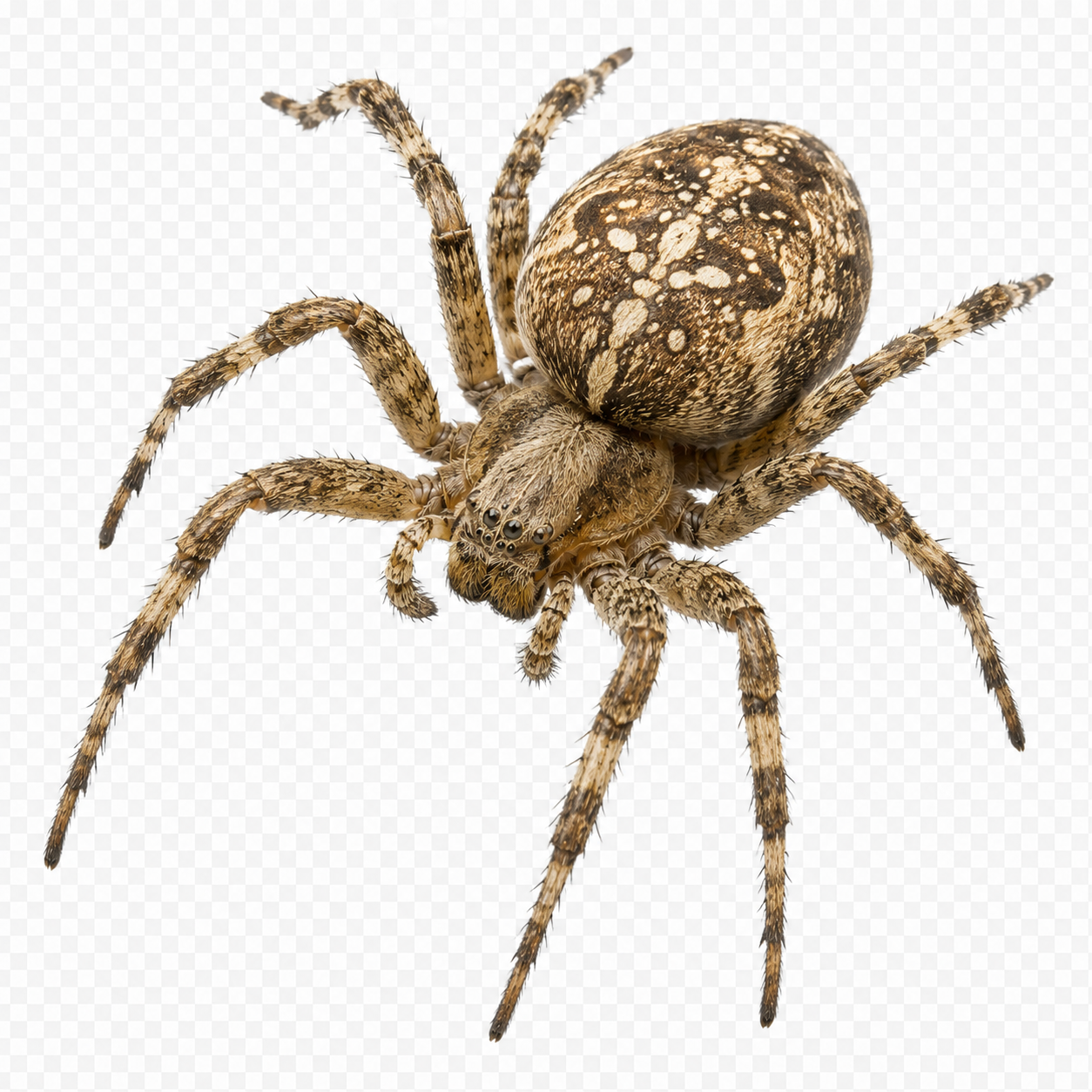
Orb Weavers build the classic circular spider web most of us drew as children. They come in many colors and shapes, from small spiny orb-weavers to the large black-and-yellow garden spider.
The black-and-yellow garden spider, Argiope aurantia, is common in Texas. The female can have a body more than an inch long, with legs that make her appear much larger. She often rests in the center of an impressive web decorated with a thick zigzag of silk. These spiders can capture and eat insects as large as grasshoppers.
Many orb-weavers repair or rebuild their webs regularly. Some even eat the old silk and recycle much of the material. Their webs may appear almost overnight between shrubs, porch columns or two objects positioned at exactly the height of a parent’s face.
Orb-weavers are harmless to people and rarely leave their webs. Their size and coloring can look dramatic, but they are far more interested in flying insects than in your family.
Mom’s takeaway: Leave an orb-weaver alone when its web is safely located in the garden. Move or remove the web when it blocks a doorway, walkway or play area. The spider will generally relocate or rebuild elsewhere.
Cellar Spiders: The Long-Legged Corner Residents
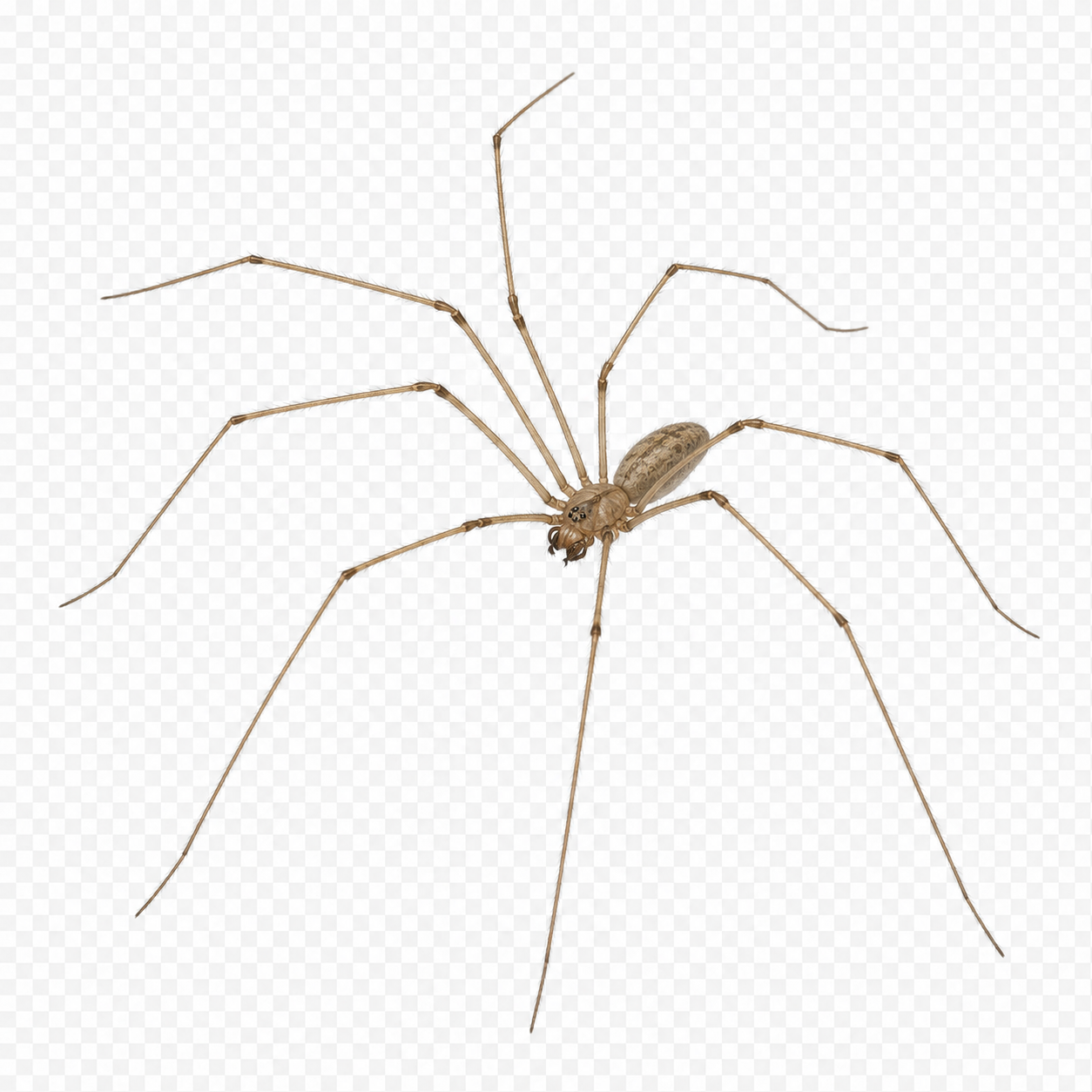
Cellar spiders are pale gray or tan spiders with small bodies and extremely long, delicate legs. They create loose, irregular webs in quiet areas such as garages, crawl spaces, utility rooms and ceiling corners.
When disturbed, a cellar spider may shake rapidly in its web. This creates a blur that can make the spider harder for predators to target and can make a person carrying a laundry basket leave the room much faster than originally planned.
Cellar spiders are sometimes called daddy longlegs, but that name causes confusion. True daddy longlegs, also called harvestmen, are arachnids but are not spiders. Harvestmen do not produce silk and do not have venom. Cellar spiders are true spiders, but they are not known to be harmful to people. The familiar claim that daddy longlegs are “the most venomous spiders in the world but cannot bite humans” is a myth.
Cellar spiders feed on small insects and may also capture other spiders. However, old webs collect dust and insect remains, so a growing collection can make an otherwise clean garage look as though Halloween decorations were installed several months early.
Mom’s takeaway: Cellar spiders are not a medical concern, but regular vacuuming will remove spiders, dusty webs and egg sacs from indoor spaces.
Grass Spiders: The Owners of Those Dew-Covered Lawn Webs
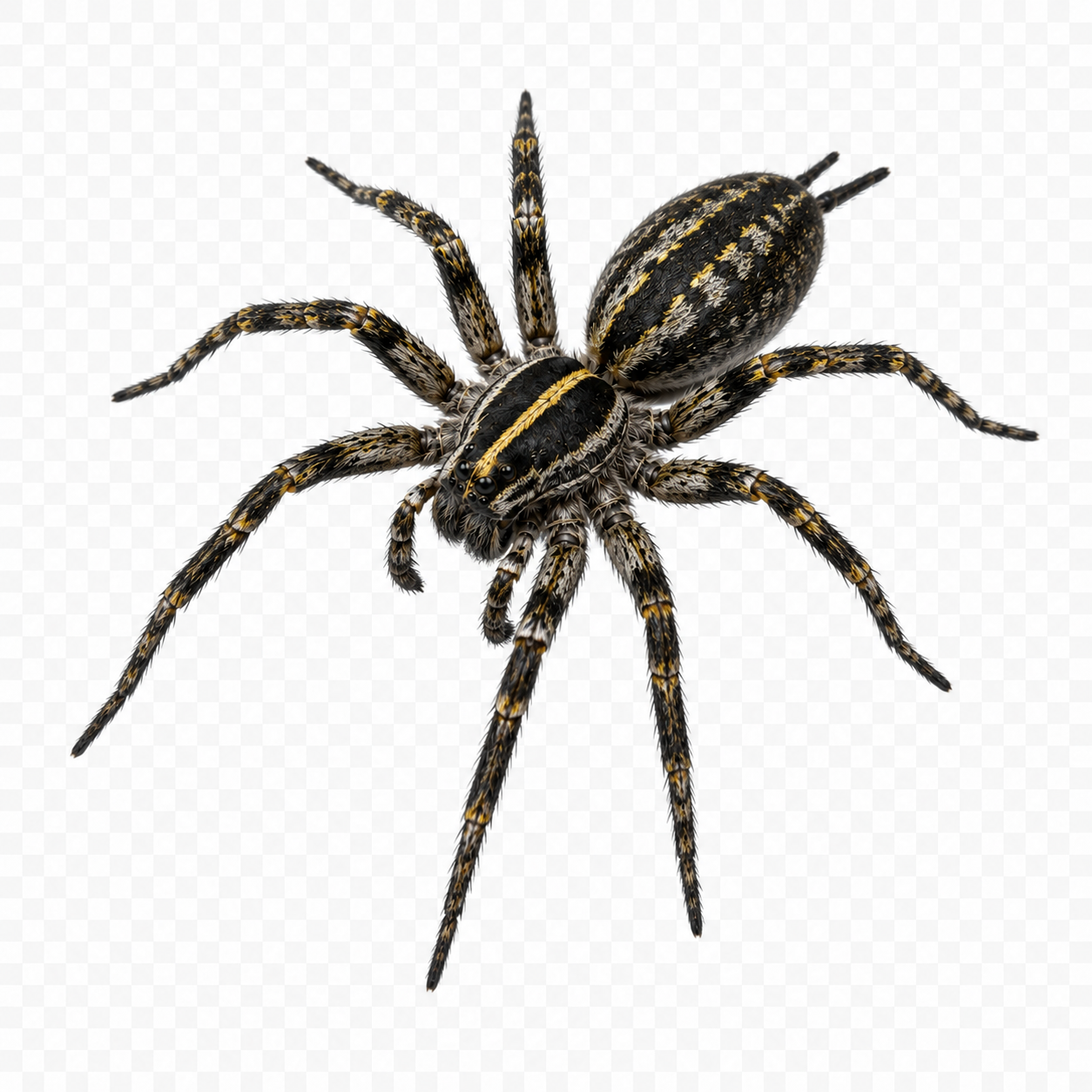
Have you ever stepped outside on a damp North Texas morning and noticed dozens of flat webs sparkling across the lawn?
Those webs often belong to grass spiders, a type of funnel-weaver.
Grass spiders are typically brown or gray with stripes near the front of the body and visible spinnerets at the end of the abdomen. They build a horizontal sheet of silk with a funnel-shaped retreat along one side. The spider waits inside the funnel, rushes out when an insect lands on the web and quickly retreats with its meal. (University of Minnesota Extension)
Their webs are commonly found in grass, low shrubs, window wells, around foundations and near outdoor steps. Morning dew simply makes them easier to see.
Grass spiders are fast, but they are not aggressive or considered dangerous. They are outdoor pest predators doing exactly what we want them to do: eating insects before those insects make their way into the house.
Mom’s takeaway: Lawn webs do not usually require treatment. Concentrate on webs next to entrances, play equipment or heavily used patio areas rather than trying to eliminate every spider from the yard.
Southern House Spiders: The Brown Recluse Look-Alike
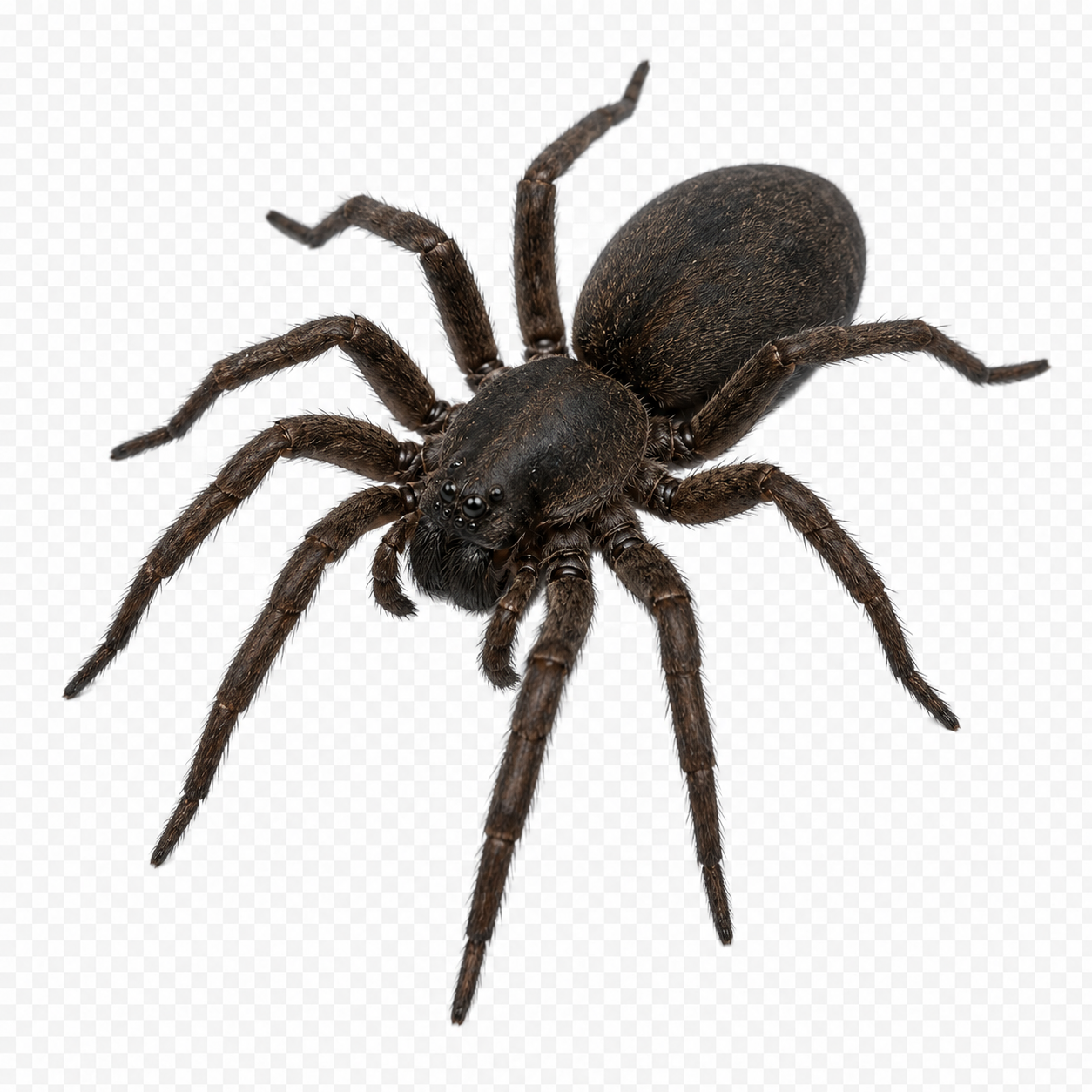
The southern house spider is also called a crevice weaver. It commonly lives in and around buildings, particularly in window frames, shutters, overhangs, barns and other sheltered structures.
Females are generally larger and darker, while males are tan to amber with slender bodies and long legs. Wandering males are frequently mistaken for brown recluse spiders because of their color and general shape. (Urban Entomology Program)
A closer look reveals important differences. Southern house spiders are generally larger than brown recluses and have eight eyes clustered together. Brown recluses have six eyes arranged in three pairs. Southern house spiders also create distinctive, somewhat woolly webs that radiate from a crack or central retreat.
Southern house spiders are not known to have medically dangerous bites. They help capture flies, roaches, beetles and other insects around buildings, although their tangled webs can become unsightly. (Ask IFAS - Powered by EDIS)
Mom’s takeaway: Do not identify a brown spider by color alone. Southern house spiders, wolf spiders and several other harmless species are routinely mistaken for brown recluses.
Black Widows: A Spider That Deserves Respect, Not Panic
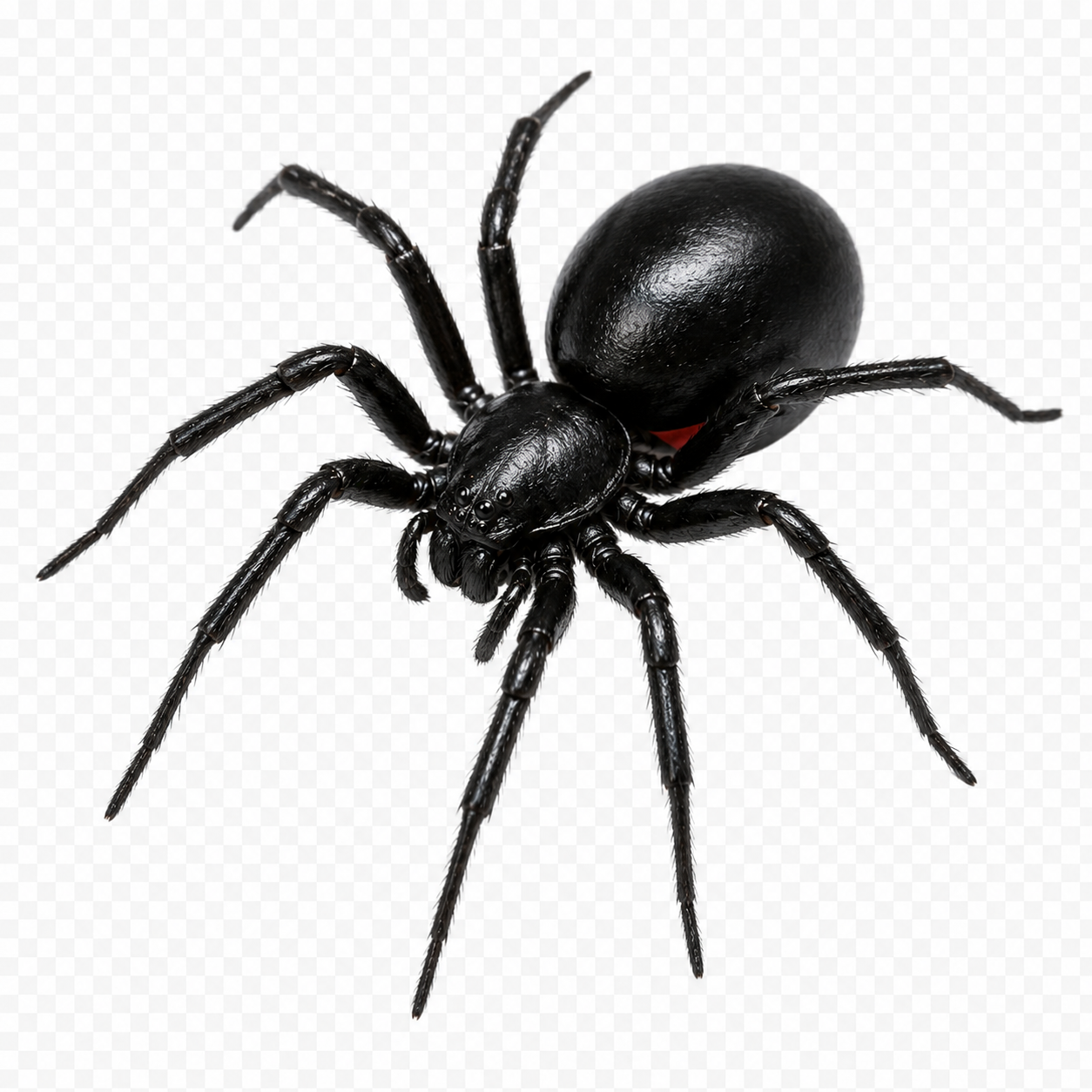
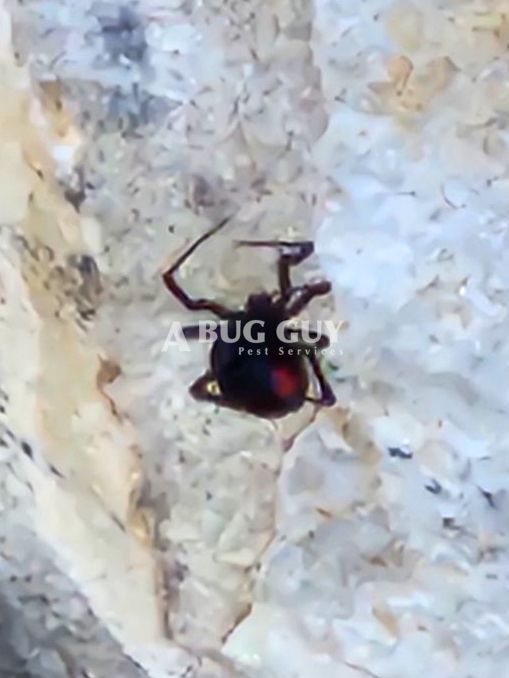
Adult female black widows are typically glossy black with a rounded abdomen. The best-known identification mark is the red or reddish-orange hourglass on the underside of the abdomen. Males and immature widows may be smaller and have red, orange or white markings on their backs and sides.
Black widows build strong, irregular, sticky webs in protected locations. Around North Texas homes, that may include:
- Woodpiles
- Garages and sheds
- Meter or utility boxes
- Crawl spaces
- Rain downspouts
- Shrubbery
- Outdoor furniture
- Other quiet areas that are rarely disturbed
Widows are not roaming around looking for someone to bite. Bites generally happen when the spider is trapped, pressed against the skin or disturbed in its web.
Black widow venom affects the nervous system. A bite may initially feel like a pinprick, followed by redness and swelling. More serious symptoms can include muscle cramps or twitching, severe pain, abdominal pain, sweating, nausea, vomiting and changes in blood pressure. Children, older adults and people with certain health conditions may be at greater risk of serious effects.
Mom’s takeaway: Teach children not to reach blindly into woodpiles, utility boxes, storage areas or beneath outdoor furniture. Wear gloves while moving stored materials, and use a flashlight before placing your hands into dark spaces.
A suspected black widow bite warrants prompt medical guidance. Call Poison Control at 1-800-222-1222 or seek urgent medical care for significant pain, muscle cramping, breathing difficulty or other concerning symptoms. (Poison Control)
Brown Recluses: Important to Recognize and Commonly Misidentified
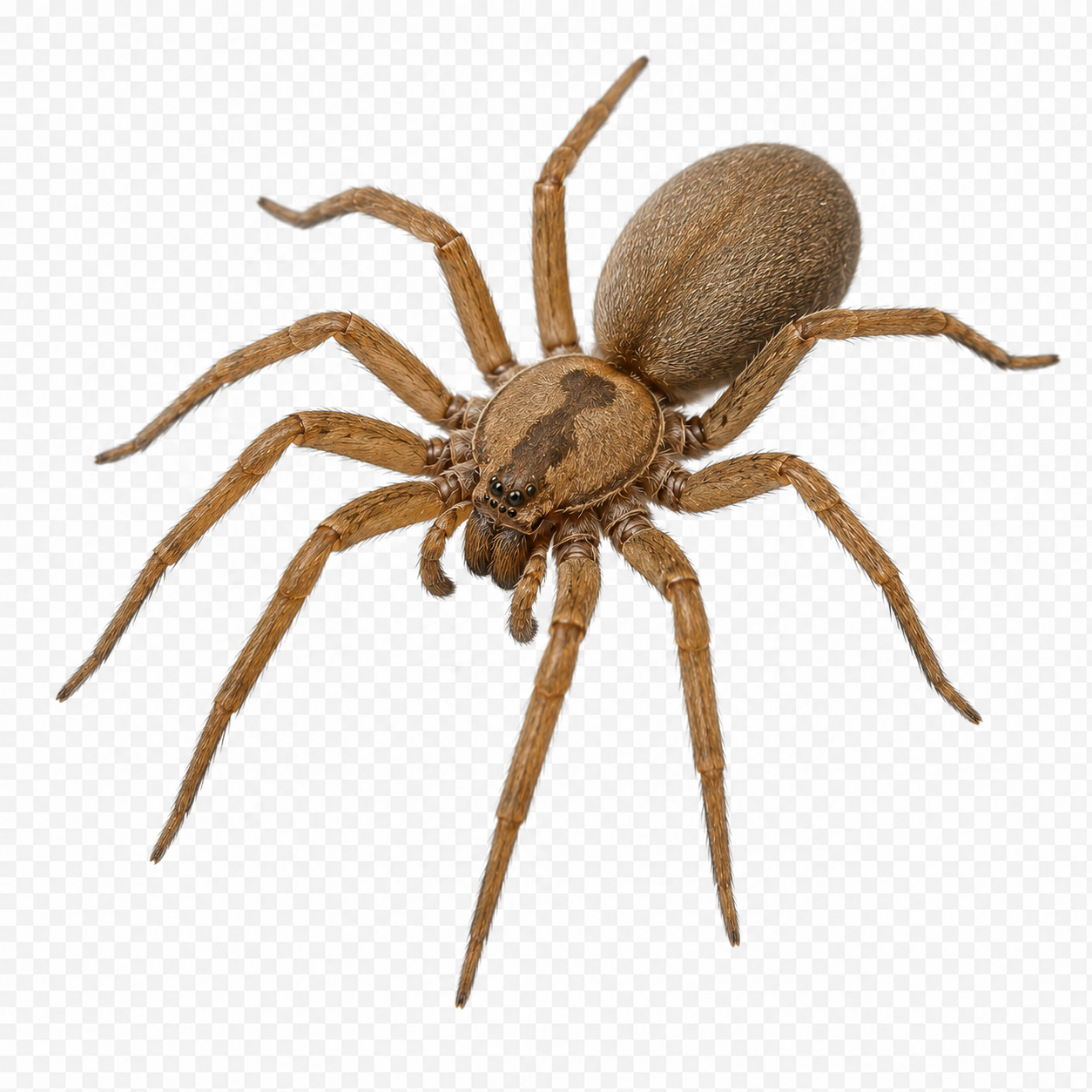
Brown recluse spiders range from tan to grayish brown and have long, slender legs without obvious spines. Adults often have a darker violin-shaped mark on the front portion of the body, but the “violin test” is not reliable by itself. Many harmless spiders have markings that can look violin-like, especially when viewed through the highly scientific process known as zooming in on a blurry phone photo.
A more reliable identifying feature is the eye arrangement. Brown recluses have six eyes arranged in three pairs, while most spiders have eight. Unfortunately, counting spider eyes is not the type of project most moms want to perform on the kitchen counter, so professional identification is often the safer choice.
Brown recluses are nocturnal hunting spiders. They do not use a large visible web to catch prey. During the day, they hide in dry, sheltered, rarely disturbed spaces, including:
- Cardboard boxes
- Closets
- Attics
- Crawl spaces
- Garages and barns
- Wall voids
- Stored clothing
- Firewood
- Areas beneath boards, stones or debris
They are shy rather than aggressive. Bites typically occur when a spider becomes trapped against the skin, such as inside clothing, bedding, shoes or gloves, or when someone moves stored materials without protection.
A brown recluse bite may not be noticed immediately. The area can later become red, itchy, swollen or painful. In some cases, a blister or slow-healing lesion develops, and more serious reactions may include fever, chills or nausea. However, many skin infections and other medical conditions resemble alleged spider bites. Without seeing and correctly identifying the spider, it can be difficult to determine whether a lesion was caused by a brown recluse. (Poison Control)
Mom’s takeaway: Do not assume that every unexplained red spot is a spider bite and do not ignore a worsening wound. Wash the area with soap and water, avoid scratching it and contact a healthcare professional or Poison Control at 1-800-222-1222 for guidance. (Poison Control)
What Should You Do When You Find a Spider?
Start by deciding where the spider is and whether you can identify it safely.
A jumping spider on the patio and a suspected black widow beneath a child’s outdoor toy do not require the same response.
For a clearly harmless spider, place a cup or container over it, slide a firm sheet of paper underneath and release it outdoors. Do not handle a spider with bare hands unless you are certain it is harmless.
For a possible widow or recluse, keep children and pets away from the area. Take a clear photograph from a safe distance when possible. Do not risk a bite trying to capture a spider for identification.
When there are repeated sightings, sticky traps placed along walls and in quiet storage areas can help determine what is present and where activity is concentrated. Keep traps out of reach of children and pets. (Insects in the City)
Seven Practical Ways to Reduce Spiders Around Your Home
1. Seal the easy entrances
Install or repair weather stripping around doors and windows. Seal gaps around pipes, utility lines and the foundation. Repair torn window and door screens.
2. Give the garage a clutter reset
Spiders appreciate stacks of cardboard boxes because they provide dark, protected crevices. Tape boxes closed or replace them with plastic containers that have tight-fitting lids.
3. Move firewood away from the house
Store firewood and construction materials away from exterior walls and above the ground when possible. Inspect pieces before carrying them indoors.
4. Trim plants touching the home
Shrubs and branches that rest against the structure create bridges for spiders and the insects they eat.
5. Reconsider exterior lighting
Bright outdoor lights attract flying insects, which attract spiders. Direct lights away from doors and windows, turn unnecessary lights off and consider bulbs that are less attractive to insects.
6. Vacuum webs and egg sacs
Vacuum along baseboards, beneath furniture, around windows and inside garage corners. Remove the vacuum contents promptly when spiders or egg sacs have been collected.
7. Address the spider buffet
Recurring spider activity often points to an abundant food supply. Reducing roaches, crickets, flies, mosquitoes and other insects makes the home less attractive to spiders over time.
When Should You Call a Pest-Control Professional?
Professional help may be appropriate when:
- You repeatedly find black widows or suspected brown recluses.
- Spiders are appearing in bedrooms, closets or children’s play areas.
- Sticky traps collect several similar spiders.
- Webs return quickly after removal.
- You are seeing many spiders along with roaches, crickets or other insects.
- The identification is uncertain.
- You are uncomfortable inspecting attics, crawl spaces or storage areas safely.
Established brown recluse populations can be difficult to control and often require a combination of sanitation, monitoring, exclusion and carefully targeted treatment. Simply spraying the spider you happen to see does not address the hidden population or the insects supporting it. (Insects in the City)
Frequently Asked Questions About North Texas Spiders
Wolf spiders are not considered medically dangerous and are not aggressive. However, children should be taught to observe spiders without picking them up.
Not necessarily. Hunting spiders such as wolf spiders and jumping spiders frequently wander indoors by accident. Repeated sightings of the same type, especially in storage areas, deserve a closer inspection.
No. Outdoor spiders are beneficial predators and are an important part of the landscape. Focus on keeping spiders away from doors, patios, play areas and the interior of the home rather than trying to make the entire yard spider free.
No. Harvestmen, the arachnids most commonly called daddy longlegs, do not have venom and are not spiders. Cellar spiders are true spiders but are not known to be harmful to people.
Seal gaps, repair screens, reduce clutter, trim plants away from the structure and control the insects spiders are feeding on. Regularly removing webs and egg sacs also helps.
The Bottom Line
Most North Texas spiders are not dangerous. Wolf spiders, jumping spiders, orb-weavers, grass spiders, cellar spiders and southern house spiders may look unsettling, but they spend their time controlling insects and trying to avoid the humans who keep interrupting their workday.
Black Widows and Brown Recluses deserve more caution, particularly around children’s belongings, stored clothing, garages, woodpiles and other undisturbed spaces. The key is accurate identification, sensible prevention and knowing when the situation calls for professional help.
Moms already manage missing shoes, mysterious stains, last-minute school projects and snacks that were apparently “not cut the right way.”
You should not have to become the household arachnologist, too. ;)
Seeing more spiders than you are comfortable with? A Bug Guy Pest Services can identify the spiders around your North Texas home, look for the insect activity attracting them and recommend a practical plan to help keep them out of your family’s living spaces.
Stay safe out there!